

Master's Thesis | Automotive Desicion-support Interface | UX-Research
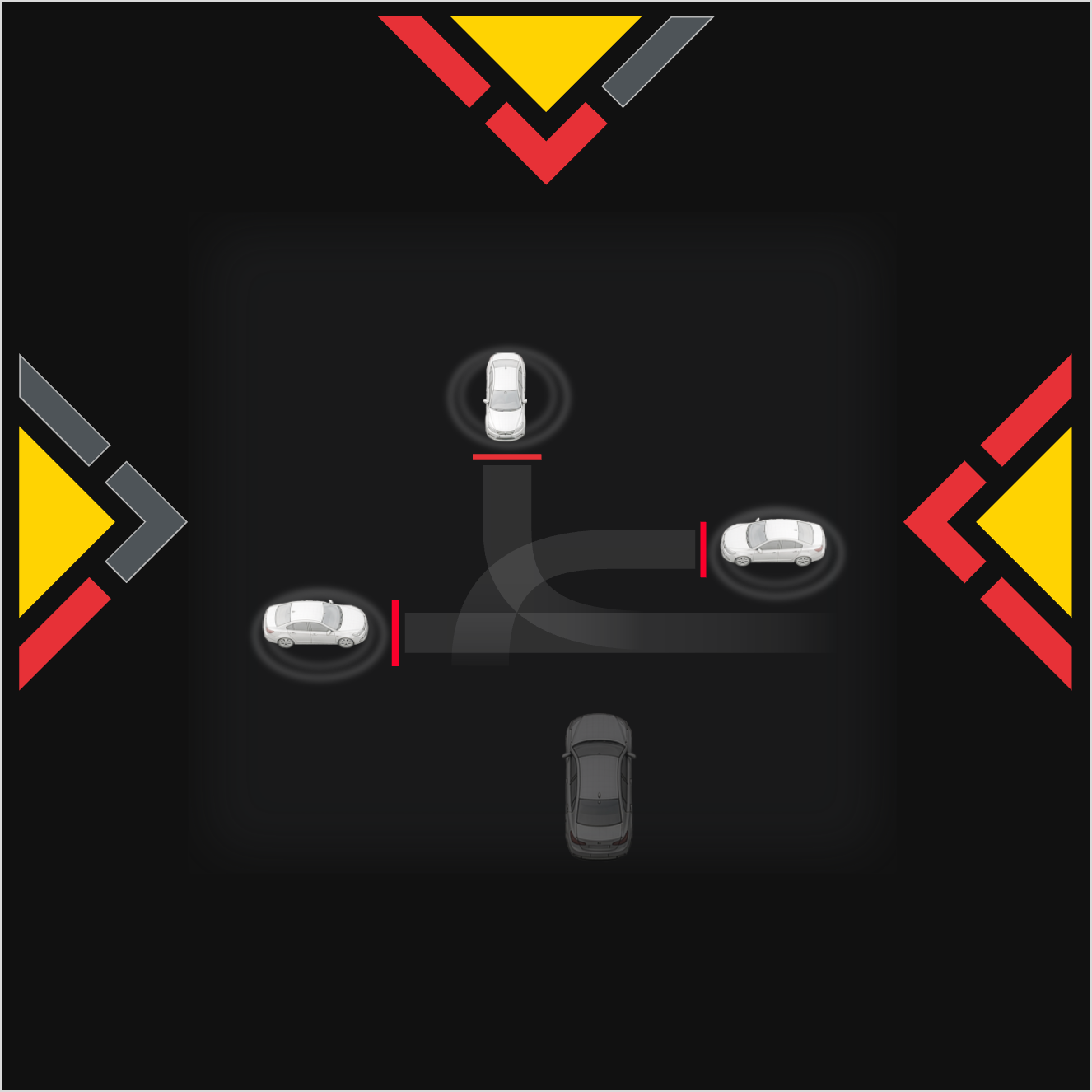
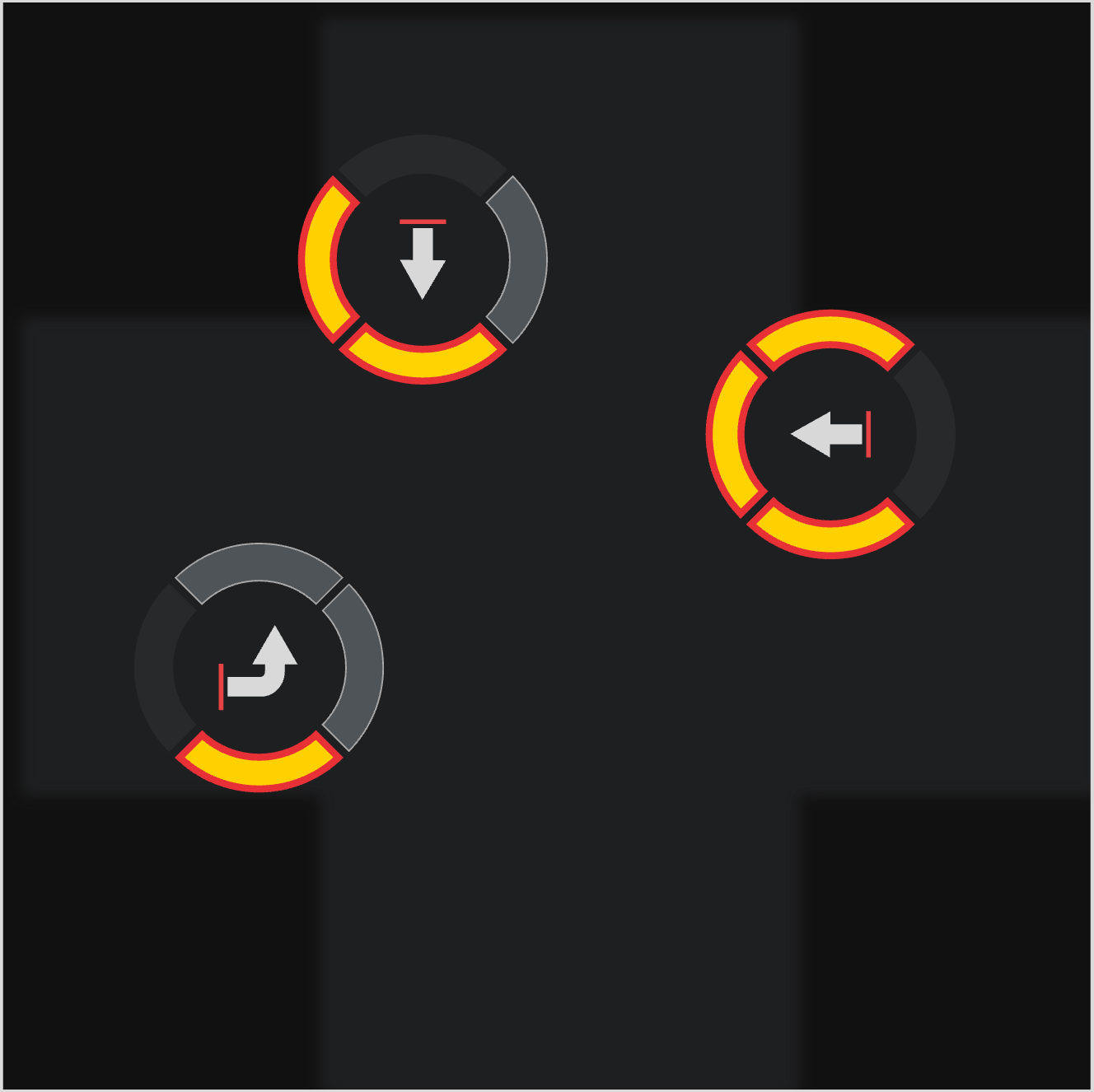
My thesis project investigated how autonomous vehicle (AV) driving intentions can be visualized through an in-vehicle interface to support human drivers’ situational awareness and anticipation at unsignalized four-way intersections, without exceeding their cognitive processing capacity.
The work addressed communicative challenges in mixed-autonomy traffic, where mismatches between human drivers’ expectations and AV behaviour can cause uncertainty. A research-through-design approach was applied, combining activities like work domain analysis, expert, co-design activities, iterative prototyping, and qualitative usability testing in a driving simulator setup.
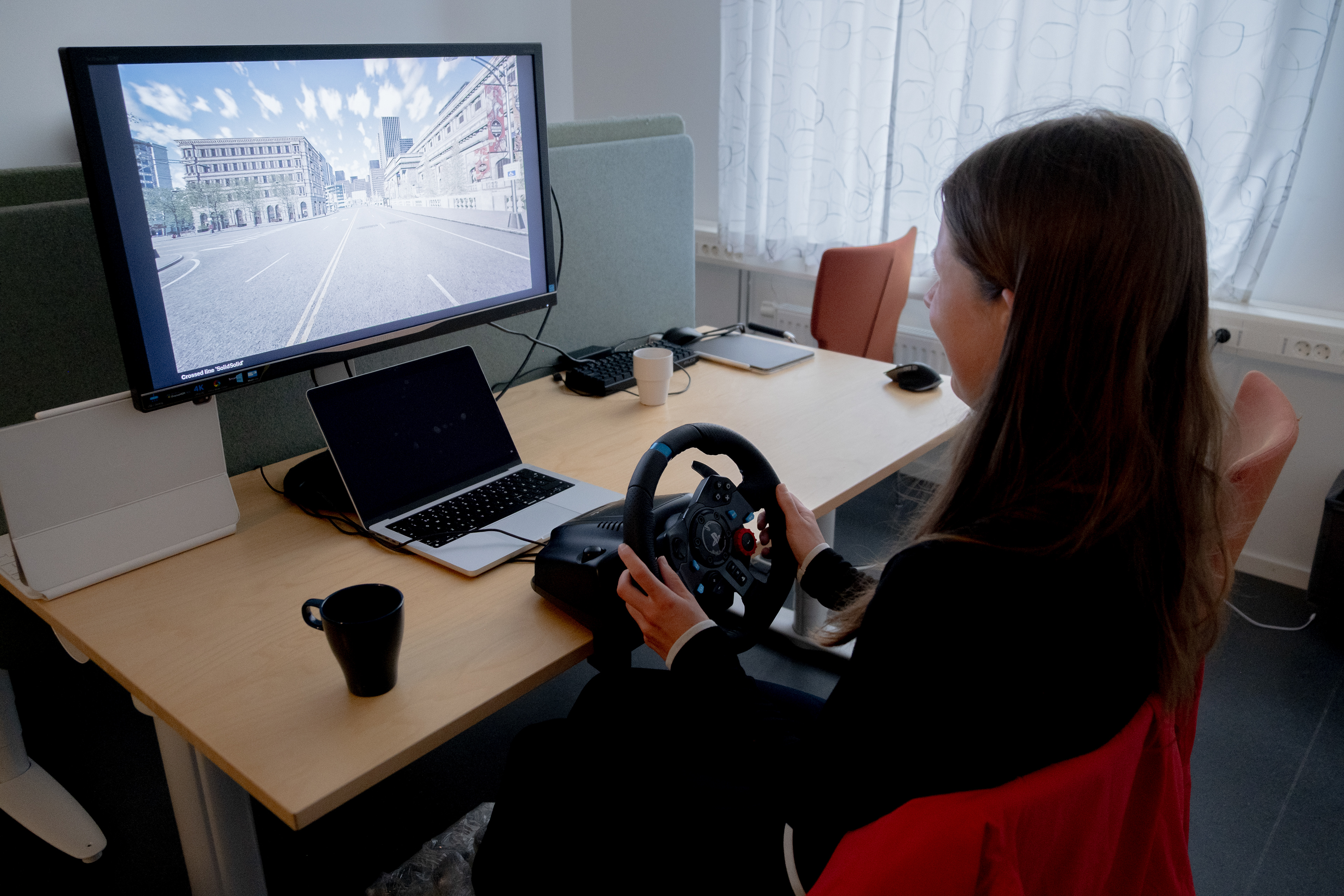
Two interface concepts were developed and evaluated with eight participants through driving sequences and semi-structured interviews, followed by thematic analysis. The results indicate that visualizing autonomous vehicles’ presence, their current yielding behaviour and intended movements helps drivers perceive relevant vehicles, understand yielding order, and anticipate the next step of the interaction.
Color and yielding cues formed the core of the effective visual hierarchy, while more distributed and information-dense representations increased cognitive load, particularly in three-vehicle situations. Overall, the findings suggest that transparent automation for mixed-autonomy intersections should prioritize reduced, self-relevant, and hierarchically structured information about AV intent, with yielding information as the primary cue for driver decision-making.
Color and yielding cues formed the core of the effective visual hierarchy, while more distributed and information-dense representations increased cognitive load, particularly in three-vehicle situations. Overall, the findings suggest that transparent automation for mixed-autonomy intersections should prioritize reduced, self-relevant, and hierarchically structured information about AV intent, with yielding information as the primary cue for driver decision-making.